Article
African Luxury Interior Design: Where Heritage Meets Global Craftsmanship
Mar 18, 2026
Article
Mar 18, 2026
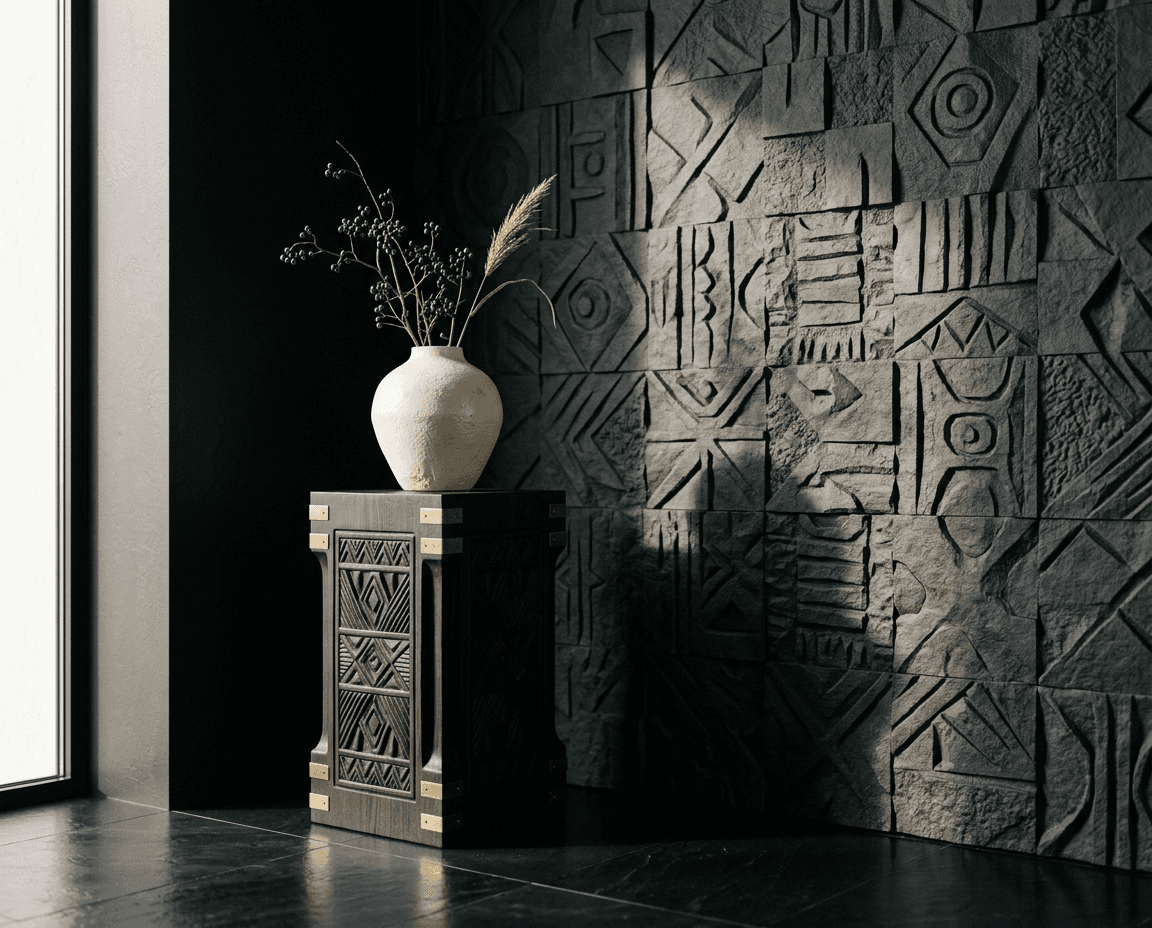
Interior design today is increasingly global. Materials move across continents, design ideas travel faster than ever, and the most remarkable interiors often emerge from the meeting of different cultures and traditions.
Yet, in my experience, the most meaningful design always begins somewhere deeply personal: heritage.
For many African designers, culture is not simply a reference point or an aesthetic layer added to a project. It is the very foundation of how we see space, proportion, materials, and symbolism.
At King Farai, our design philosophy has evolved at the intersection of three powerful influences: African heritage, global luxury design, and Asian craftsmanship. Over the years, our work has become a dialogue between cultures, materials, and histories—an ongoing exchange that shapes spaces that feel both contemporary and timeless.
Growing up within the Shona cultural tradition of Southern Africa, one is constantly surrounded by visual language—although at the time, it is rarely recognised as such.
When you grow up inside a culture, many of its influences feel ordinary. They become part of the background of everyday life. It is only when you step away from that environment, and begin to look at it from the perspective of an outsider, that its depth and richness become visible.
Shona art, architecture, and craft traditions are deeply rooted in geometry, symbolism, and the use of natural materials. Patterns repeat with intention. Forms are often sculptural yet balanced. Materials such as stone, clay, and earth-derived pigments ground the work firmly in the landscape from which it comes.
These elements are never purely decorative. They carry rhythm, meaning, and cultural memory.
Over time, I began to recognise how these visual principles naturally influence our design work today. Clean lines, geometric composition, and grounded colour palettes appear frequently in our interiors, often in ways that are subtle rather than literal.
A flooring pattern may echo traditional geometric rhythms. A custom furniture piece may borrow its proportions from sculptural forms found in traditional craft. Earthy tones—deep browns, clay reds, charcoal blacks, and natural stone hues—create environments that feel calm, rooted, and connected to the African landscape.
In many ways, these foundations have become central to what is now recognised internationally as modern African luxury design.
One of the most fascinating aspects of traditional African design—particularly within many Southern African cultures—is the presence of geometry as both ornament and philosophy.
In Shona culture, as in many other African traditions, geometry appears everywhere: in textiles, pottery, carved objects, and architectural arrangements. At first glance these patterns may seem purely decorative, but they are often deeply symbolic. Repetition, symmetry, and rhythm reflect ideas of continuity, lineage, and harmony with the natural world.
Over time, I began to recognise how naturally these principles translate into spatial design. Geometry becomes a guiding framework for proportion, balance, and movement within a room.
A ceiling detail might echo a repeating pattern found in traditional craft. A marble floor inlay might carry a subtle geometric rhythm that leads the eye through the space. Even furniture placement can follow invisible lines that create balance and calm within a room.
What makes this particularly interesting is how these principles resonate with design traditions beyond Africa.
Across many Asian cultures—particularly within imperial architecture and classical garden design—geometry also plays a central role. Symmetry, axial alignment, and proportional harmony are used to express order, dignity, and reverence for space.
When I began exploring Asian design traditions more deeply, I noticed an unexpected kinship between these philosophies. Although separated by geography and history, both African and Asian traditions share a respect for structure, symbolism, and the quiet power of repetition.
In contemporary interiors, these influences often intersect. African geometric language may guide the composition of a space, while Asian-inspired discipline in proportion and restraint helps refine the overall atmosphere.
The result is an interior that feels calm, balanced, and intentional—an environment where cultural memory and modern design coexist.
For me, this intersection between African geometry and global design philosophy is one of the most exciting territories in contemporary luxury interiors. It allows us to design spaces that feel deeply rooted in heritage while remaining entirely relevant to modern life.
Across the African continent, traditions of royalty and ceremony have long shaped architecture, craft, and visual identity.
Royal courts historically used textiles, metals, carved forms, and layered materials to communicate power, dignity, and cultural pride. These expressions were not only about wealth—they were about presence, symbolism, and permanence.
This legacy continues to influence how we approach luxury interiors today.
In contemporary design, these references often appear through the careful use of rich materials and metallic finishes. Dark gold tones, for example, carry a sense of warmth and prestige that resonates strongly with African traditions of royalty.
When these metallic elements are paired with deeper palettes—charcoal stone, walnut woods, black marble, or smoked glass—the result is an atmosphere that feels both grounded and regal.
It is this balance between earthiness and opulence that often defines African luxury interiors. The spaces feel rooted in nature, yet they also carry a quiet sense of ceremony.
While cultural heritage informs the philosophy behind our design work, the execution of many modern interiors relies on a global network of craftsmanship. Asia plays an especially significant role in this exchange.
Over the past few decades, countries such as China have developed remarkable capabilities in luxury interior manufacturing—from precision metalwork and custom lighting to marble fabrication and bespoke furniture production.
For a design studio working at an international level, these relationships open up enormous possibilities. They allow African design concepts to be realised with an extraordinary level of precision and technical capability.
Beyond manufacturing, Asian cultures themselves have also influenced aspects of our aesthetic thinking. There are interesting parallels between many African and Asian traditions, particularly in the way symbolism, craftsmanship, and respect for materiality shape design.
These shared values often lead to subtle exchanges of ideas. Certain proportions, textures, or spatial compositions may borrow from Asian aesthetics while still remaining rooted in African identity.
What emerges from this collaboration is not imitation, but dialogue. African design narratives are interpreted through the hands of highly skilled international craftsmen, resulting in interiors that carry both cultural depth and global sophistication.
Luxury clients today are increasingly international. A residence in Johannesburg, Dubai, London, or Singapore may share similar expectations of technology, comfort, and craftsmanship.
Yet what truly distinguishes one design studio from another is not simply technical ability. It is perspective. African designers bring a unique lens to the global design conversation. Our work is often deeply informed by nature, symbolism, and authenticity of materials. There is an emphasis on atmosphere rather than ornamentation, and on cultural storytelling rather than surface decoration.
When these ideas intersect with contemporary architecture and global craftsmanship, something new begins to emerge: a category of design that might best be described as African contemporary luxury.
For many years, African design was underrepresented within the global luxury design narrative. The continent has always been a source of inspiration, yet its designers were rarely positioned at the centre of the conversation.
That reality is beginning to change.
Across Africa today, a new generation of architects, artists, and interior designers is redefining what modern African design can be. Heritage is no longer viewed as something belonging only to the past. Instead, it is becoming a foundation for innovation.
Modern African luxury design now brings together cultural memory, contemporary architecture, global craftsmanship, and a distinctly African understanding of space and materiality.
In this context, African interior design is no longer simply regional. It is global. And its influence is only beginning. A Continuing Design Dialogue For us, design has never been about following trends. It has always been about understanding the deeper stories that shape how people live, build, and express identity through space.
African heritage offers a profound visual and philosophical foundation. Shona culture, royal symbolism, and the rhythms of geometry provide a language that is both ancient and deeply relevant today. When these ideas meet contemporary architecture and global craftsmanship, new possibilities begin to emerge.
Our work continues to evolve through this dialogue—between Africa and the wider world, between heritage and innovation, between tradition and modern living.
Each project becomes an opportunity to explore how these influences can come together to create interiors that feel authentic, refined, and enduring. In many ways, we are still at the beginning of this journey. African design is entering a new chapter in which its cultural depth, material richness, and philosophical clarity are being recognised on a global stage.
It is an exciting moment—not only for African designers, but for the future of luxury design itself.